Working Principle GM Counter Plateau Curve Experiment
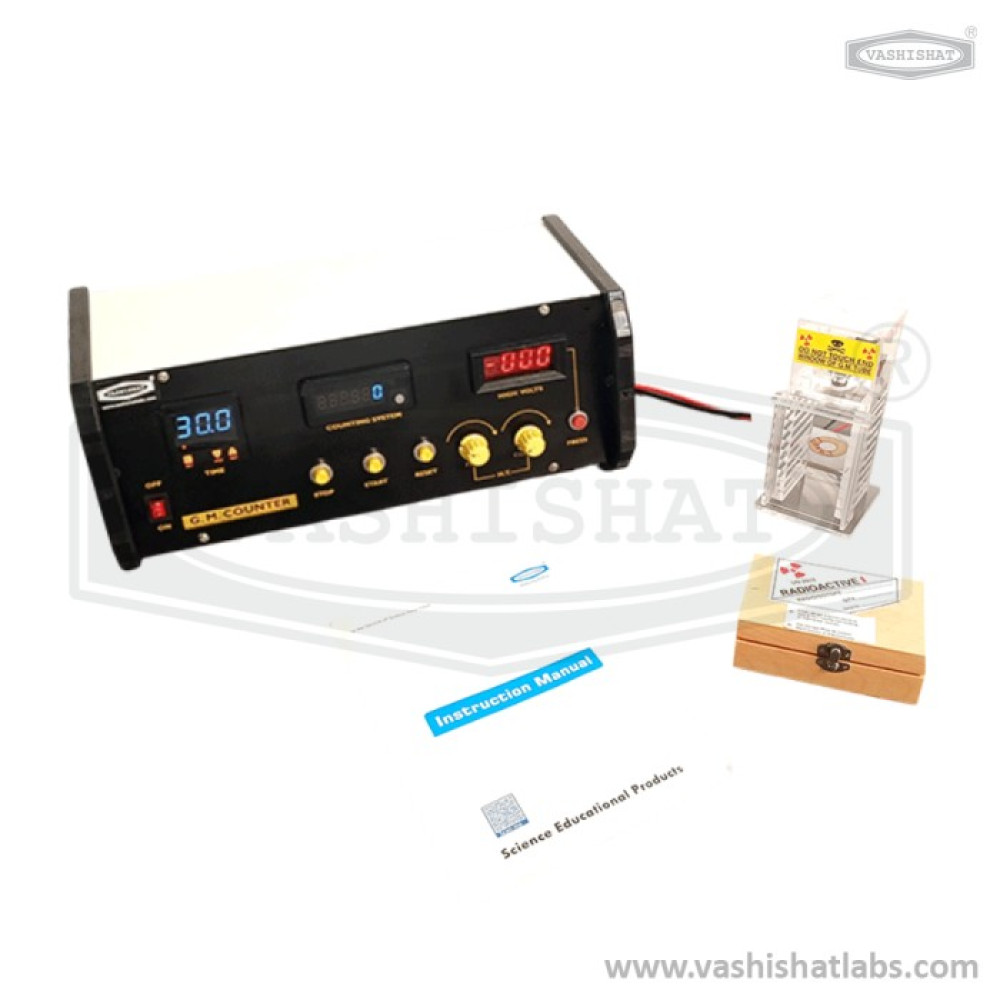
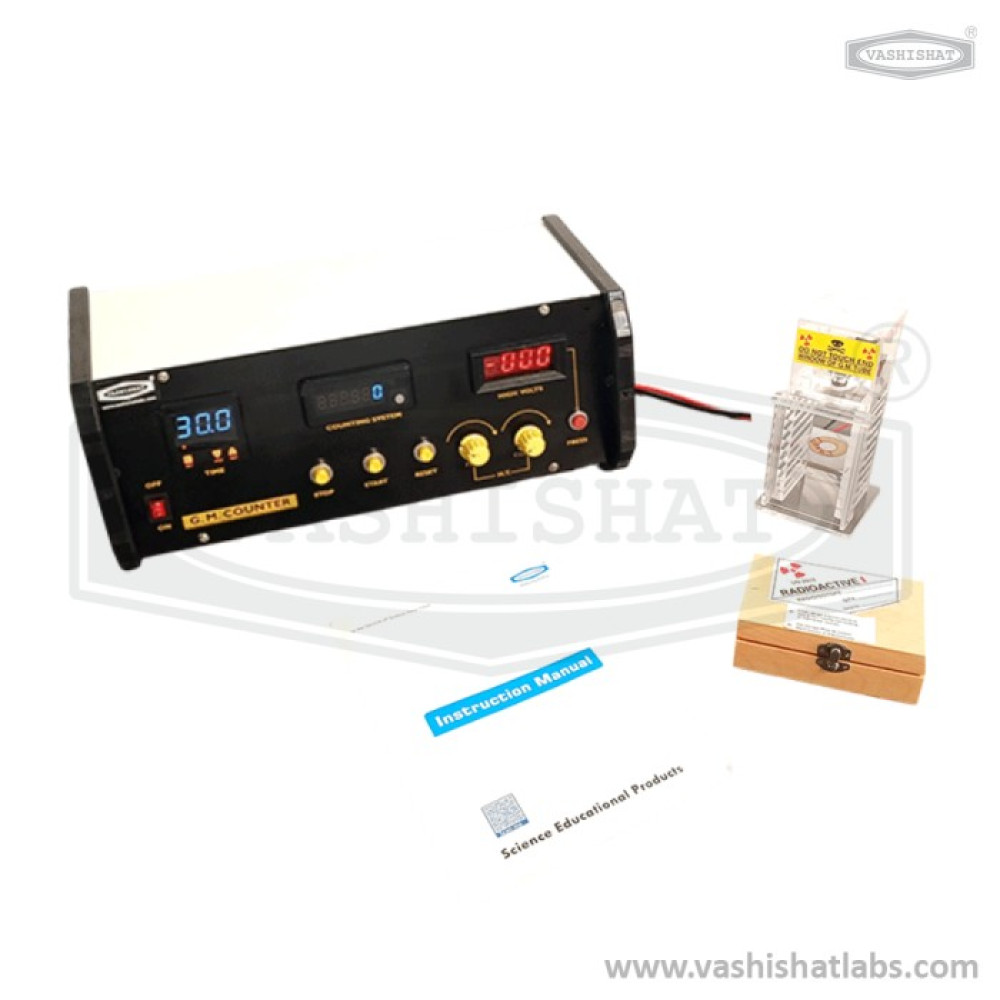
The working principle of the Geiger–Müller (GM) counter is based on the ionization of gas molecules by incident nuclear radiation. When ionizing radiation enters the GM tube, it produces ion pairs in the gas-filled chamber. A high voltage applied between the central anode wire and the cathode causes a cascade of ionization, resulting in a detectable electrical pulse. By varying the applied voltage and recording the count rate, the plateau region of the GM counter is obtained. The plateau indicates the range of operating voltage over which the GM counter gives a stable and nearly constant count rate, independent of voltage fluctuations.
Theory GM Counter Plateau Curve Experiment
In the GM counter plateau curve experiment, a Geiger–Müller tube filled with a suitable gas and quenching agent is exposed to a radioactive source. As the applied voltage across the GM tube is gradually increased, the count rate initially rises sharply due to increased gas amplification. After this region, a nearly flat section known as the plateau region appears, where the count rate remains approximately constant over a range of voltages.
The slope of the plateau provides information about the performance and stability of the GM counter. A smaller plateau slope indicates better detector quality and longer operational life. Beyond the plateau region, further increase in voltage leads to continuous discharge, which can damage the GM tube. Therefore, the optimal operating voltage of the GM counter is selected from the middle of the plateau region. This experiment is essential for understanding radiation detection, nuclear instrumentation, and counting characteristics of GM counters.
Have a catalog? Know what you would like to buy? Save time, enter item and quantities here, when you are finished click on the shopping cart button. You are ready to check out, it’s that quick.